How to Wear Ihram: A Step-by-Step Guide for Pilgrims
Discover the spiritual significance and step-by-step process of wearing Ihram during the Islamic pilgrimage of Hajj or Umrah.
The pilgrimage to Makkah—whether for Hajj or Umrah—is one of the most significant spiritual journeys a Muslim can undertake. For many expatriates living in Saudi Arabia and the Middle East, this sacred duty becomes more accessible, yet it requires careful preparation. Among the most important aspects of this preparation is understanding how to properly wear and observe the state of Ihram.
This guide will walk you through everything you need to know about Ihram: what it means, how to wear it correctly, and the spiritual significance behind this ancient practice.
What is Ihram?
Ihram refers to both the sacred state a pilgrim enters before performing Hajj or Umrah and the simple garments worn during this state. The word itself comes from the Arabic root “haram,” meaning forbidden or sacred, referring to the prohibitions that take effect once a pilgrim enters this state.
The Spiritual Significance
Ihram represents equality and humility before Allah. When wearing these simple, unstitched garments, all social distinctions disappear. A billionaire and a laborer stand side by side in identical clothing, equal in the eyes of God. This powerful symbol reminds pilgrims that worldly status means nothing in the spiritual realm.
The state of Ihram also serves as a rehearsal for the Day of Judgment, when all people will stand before Allah stripped of their worldly possessions and identities.
What Does Ihram Look Like?
For Men
Men’s Ihram consists of two pieces of white, unstitched cloth:
- Lower garment (Izar): A piece of cloth approximately 1.5 meters by 2 meters, wrapped around the waist and covering the lower body from waist to ankles
- Upper garment (Rida): A similar piece draped over the shoulders and upper body
The simplicity and uniformity of these garments embody the core Islamic principle of equality among all believers.
Also Read:
Saudi Arabia Standardizes Bus Driver Uniforms
For Women
Women’s Ihram is less prescriptive than men’s. They may wear any modest, loose-fitting clothing that meets Islamic standards of modesty. Key requirements include:
- Clothing must cover the entire body except the face and hands
- Garments should be loose and not reveal the shape of the body
- Unlike men, women may wear stitched clothing
- A headscarf (hijab) is worn to cover the hair, but the face must remain uncovered
- No gloves are permitted—hands must be bare
How to Wear Ihram for Men: Step-by-Step
Step 1: Preparation and Purification
Before wearing Ihram, complete the following:
Physical Preparation:
- Trim or remove hair from the underarms and pubic area
- Clip your nails
- Take a bath or shower (Ghusl) with the intention of purification
- Some men prefer to apply non-alcoholic perfume to their body (not to the Ihram garments themselves) before entering the state of Ihram
Note: Once you enter the state of Ihram, you cannot apply perfume, cut hair, or trim nails.
Step 2: Donning the Lower Garment (Izar)
- Hold the larger cloth and fold it lengthwise if needed
- Wrap it around your waist, ensuring it covers from the navel to below the knees (preferably to the ankles)
- Secure it with a belt, safety pins, or special Ihram clips—the cloth itself is not stitched, but you may fasten it
- Make sure it’s comfortable and won’t slip during movement
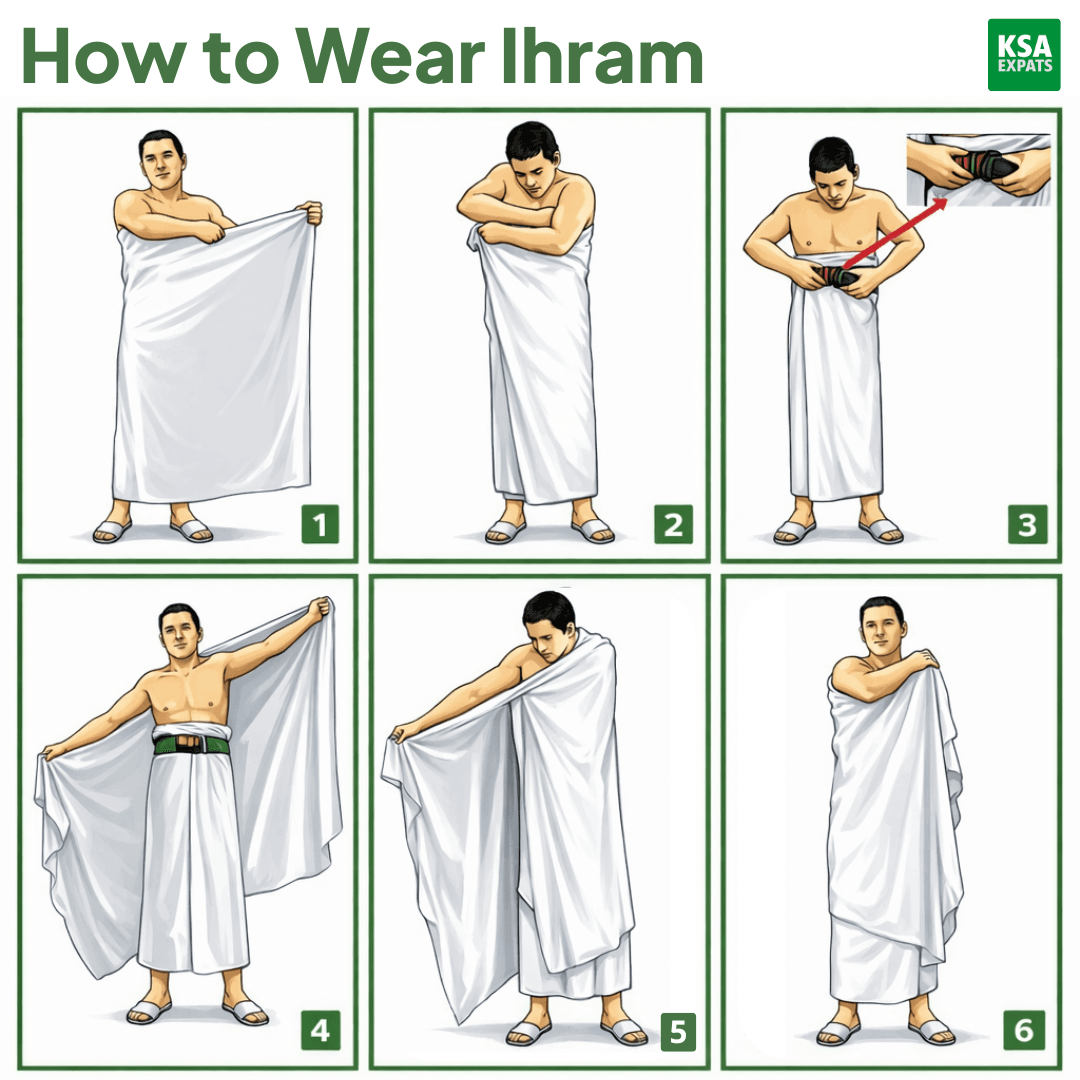
Tip: Practice wrapping the Izar at home several times before your journey. This prevents awkward moments at the Miqat (the designated boundary where pilgrims enter Ihram).
Step 3: Wearing the Upper Garment (Rida)
- Drape the second cloth over your left shoulder
- Bring it across your chest and back
- The cloth should cover your upper body, with both ends hanging down
During Tawaf: When performing Tawaf (circumambulation around the Kaaba), men practice “Idtiba,” which means exposing the right shoulder by placing the Rida under the right armpit and over the left shoulder. After Tawaf, you may cover both shoulders again.
Also Read:
Understanding the Weather in Makkah: A Guide for Pilgrims and Visitors
Step 4: Footwear
Wear sandals or flip-flops that expose the top of your feet and your ankles. The footwear should not cover the ankle bone or the top of the foot.
How to Wear Ihram for Women: Step-by-Step
Step 1: Purification
- Perform Ghusl (ritual bath) with the intention of entering Ihram
- Ensure cleanliness and purity
- Do not apply perfume, scented oils, or fragranced lotions after this point
Step 2: Choose Appropriate Clothing
Select modest, loose-fitting garments that:
- Cover your entire body except face and hands
- Are not transparent or form-fitting
- Are preferably plain in color (white is common but not required)
- May include an abaya, long dress, or loose tunic with trousers
Step 3: Head Covering
- Wear a hijab or headscarf to cover your hair completely
- Ensure it does not cover your face—the face and hands must remain visible
- Some women bring a small umbrella or use the edge of their scarf for shade, being careful not to let it touch the face
Important Notes for Women:
- You may wear socks and comfortable walking shoes
- Avoid jewelry, makeup, and perfume while in Ihram
- You may wear prescription glasses or sunglasses
- If needed during menstruation, you can still enter the state of Ihram and complete most rituals (except Tawaf and prayer inside the mosque)
Making the Intention (Niyyah)
After wearing the Ihram garments, you must make the intention (Niyyah) and recite the Talbiyah before crossing the Miqat:
“Labbayka Allāhumma labbayk, labbayka lā sharīka laka labbayk. Inna al-ḥamda wa n-ni’mata laka wa l-mulk, lā sharīka lak.”
Translation: “Here I am, O Allah, here I am. Here I am, You have no partner, here I am. Verily all praise and blessings are Yours, and all sovereignty. You have no partner.”
This declaration marks your formal entry into the state of Ihram.
Also Read:
Finding Your Miqat: Tips for First-Time Pilgrims
Prohibitions While in Ihram
Once in the state of Ihram, certain actions become prohibited (mahzurat):
For Both Men and Women:
- Applying perfume or scented products
- Cutting hair or nails
- Hunting or killing animals (except harmful insects)
- Sexual relations or acts leading to it
- Engaging in arguments, fighting, or sinful behavior
- Getting married or officiating a marriage
Specifically for Men:
- Covering the head with anything that touches it (hats, caps, hoodies)
- Wearing stitched garments that are tailored to the body’s shape
Specifically for Women:
- Covering the face with a niqab or veil
- Wearing gloves
Common Mistakes to Avoid
- Wearing Ihram too tight or too loose: Practice beforehand to find the right balance
- Forgetting securing clips or belts: Keep extra safety pins or Ihram clips handy
- Applying perfume after wearing Ihram: Apply it before if you wish, but never after
- Women covering their faces: Keep the face and hands exposed at all times
- Not checking the Miqat boundary: Know where you need to enter Ihram based on your direction of arrival
Practical Tips for First-Time Pilgrims
Before You Leave:
- Purchase quality Ihram garments that are thick enough not to be see-through
- Practice wearing Ihram at home several times
- Pack extra Ihram cloths in case of spills or soiling
- Bring safety pins, Ihram belt, or clips
During Your Journey:
- Wear comfortable footwear—you’ll be walking extensively
- Keep your Ihram clean; you may change into fresh Ihram garments if needed
- Stay hydrated and protect yourself from the sun
- Maintain patience and a calm demeanor
For Expatriates in Saudi Arabia: If you’re living in the Kingdom, you have the advantage of being close to the holy sites. Many expatriates perform Umrah multiple times. Each time, the proper wearing of Ihram and observance of its restrictions remains essential, no matter how familiar the journey becomes.
When Does Ihram End?
Your state of Ihram ends when you complete the rituals and perform Tahallul (exiting Ihram), which involves:
- Cutting or shaving at least three strands of hair (men often shave their entire head)
- For women, cutting a fingertip’s length from the end of their hair
After this, you may resume normal activities and clothing, and the prohibitions are lifted.
Final Thoughts
Wearing Ihram is far more than simply putting on white cloth. It represents entering a sacred state of devotion, humility, and consciousness of Allah. The physical act of wearing these simple garments strips away the markers of wealth, status, and identity, reminding every pilgrim that we are all equal before our Creator.
For expatriates preparing for Hajj or Umrah from Saudi Arabia or the UAE, understanding and properly observing Ihram is your first step toward a spiritually fulfilling pilgrimage. Take time to learn, practice, and internalize the significance of this blessed state.
May your pilgrimage be accepted and may you return spiritually renewed.
Please note: Islamic rulings can have different interpretations among scholars. For specific questions or concerns about your pilgrimage, consult with a knowledgeable Islamic scholar or an official guide from the Ministry of Hajj and Umrah. The official Hajj and Umrah websites (https://www.haj.gov.sa) provide updated guidance for pilgrims.More in this guide
- Jawazat clarifies procedure to renew expired final exit visa — Avoid penalties and ensure valid Iqama status
- Jawazat: Final Exit Visa Requires 30-Day Iqama Validity — Learn the key rules for issuing the visa
- Saudi Arabia Executes 4 Expats in Murder and Drug Smuggling Cases — Saudi Arabia executed four expats in separate murder and drug smuggling cases in Makkah and Asir
- Al Rajhi Mobile Registration: Your Complete Guide — Learn how to activate the app
- How to Register for Al Rajhi Phone Banking for the First Time — How to register in Al Rajhi phone banking and what is the Al Rajhi phone banking number and what are the features of this service
- Saudi Tourist Visa: Everything You Need to Know — Plan your trip now!